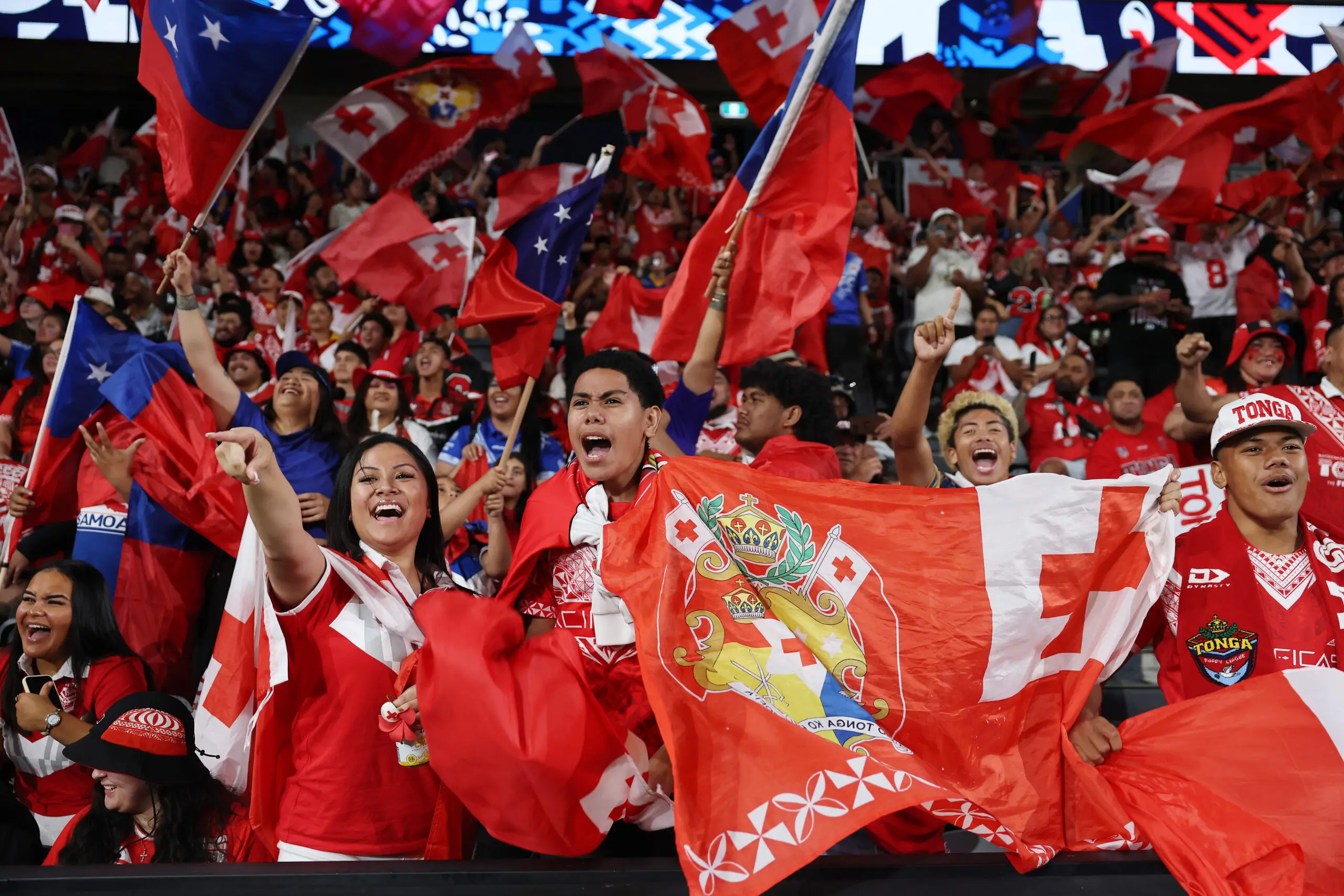
Tongan supporters were due to drive from Liverpool in Sydney up the M1 to Newcastle on Saturday, then march with local families from New Lambton to McDonald Jones Stadium. Coach Kristian Woolf had predicted a red wave of support, and said his players know they represent a whole people. Inside, Jojo Fifita scored a try from his own goal-line to put Tonga 10–6 up, and the Kiwis went to halftime only 12–10 ahead. They finished 34–10 winners.
That is the value of a World Cup that is bigger than its finalists. Dr Caleb Panapa Marsters, a Pacific studies lecturer at the University of Auckland, described flags on cars, houses and trees across Auckland, including Niue, Tokelau and even Mexico. He pointed out that most players in the Pacific teams were born in Australia or New Zealand, and still carry a responsibility to the homelands of their families. Junior Paulo, who was eligible for both Australia and New Zealand, chose Samoa from the start of his international career, and has said playing for your people and your heritage gives the game something deeper. Samoa’s supporters held parades across Australia, New Zealand, the Pacific and North America, and Brian To’o has spoken of fans travelling from San Francisco, Phoenix and Utah.
The same thing shows up all over the place. In Port Moresby, where Samoa beat Papua New Guinea 64–6, crowds roared at every tackle, and Paulo gave away his shorts and jersey while Jermain McEwen handed his boots to ball kids. The Cook Islands lost heavily to both Australia (66–6) and New Zealand (82–16), but their coach, Karmichael Hunt, said the focus was on representing their people and inspiring the next generation, win or lose. Lebanon beat France in golden point on a night when neither side could reach the semi-finals. In every case the result did not decide whether the matches mattered to the people watching.
At the top, the order has not changed. Australia beat Samoa 44–12 in front of 41,259 at Allianz Stadium, with Reece Walsh scoring a hat-trick and a 26–2 halftime lead. The final is at Lang Park on Sunday, 15 November, and Australia have won every World Cup final since New Zealand’s 34–20 win over them in 2008: 34–2 in 2013, 6–0 in 2017 and 30–10 over Samoa in 2021.
The margins have not always been wide, though. Australia beat New Zealand 24–22 earlier in the tournament, and Tonga led the Kiwis for part of the semi-final. Samoa reached the 2021 final, and Woolf took Tonga to the 2017 semi-final. Both made the last four again this year.
A tournament with 10 teams will not make every game close. What it can do is make every team count, and this one did that long before the final.
Leave a Reply