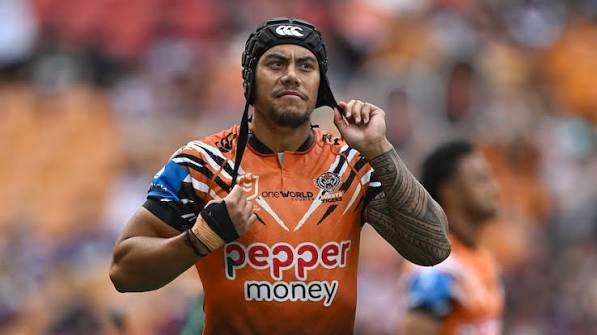
When Wests Tigers announced Jarome Luai’s signing for the 2025 season, it was a statement signing the club had not made in a decade. Here was a premiership winner from Penrith, a genuine star who had chosen the joint venture over interest from a range of other suitors. Tigers CEO Shane Richardson called him a diamond signing, the kind of player who changes not just results but the entire trajectory of a club. For a franchise that had missed finals football for over a decade, Luai represented something the Tigers had not had in years, genuine belief.
In his first season, that belief translated into results. Luai helped the Tigers claim their most wins in four seasons. He worked alongside Benji Marshall to establish standards and direction. Perhaps just as significant was what his signing did beyond his own statistics, Luai’s decision to join the Tigers became a signal to other players that the club was worth joining. The roster began attracting talent that would previously have looked elsewhere. Apisai Koroisau extended his contract. The joint venture, for the first time in years, felt like it had genuine momentum.
By early 2026, that momentum appeared to be building into something real. The Tigers sat third on the ladder, genuine finals contenders, with Luai’s game-management and leadership held up as central to the transformation. It looked, for a moment, like the signing had delivered exactly what it promised.
Then the season fell apart. The Tigers lost eight of their last ten matches, sliding well outside finals contention. The promising start evaporated, and questions began circulating about depth, structure, and whether the culture Luai had helped build could sustain itself once adversity arrived. Individually, his performances during this stretch did not match the standard he had set at Penrith, where he had been central to multiple premierships in a genuinely dominant system.
Compounding the on-field decline was a decision that would define how his Tigers tenure is remembered. In April 2026, Luai confirmed he would join the PNG Chiefs for their inaugural NRL season in 2028, activating a release clause in his five-year deal. He explained the move as being about more than football, an opportunity to be part of something socially significant in Papua New Guinea, where rugby league carries meaning beyond the sport itself. Whatever the motivation, the practical effect was clear, a marquee player entering the back half of a rebuilding project had already committed his future elsewhere.
The Tigers confirmed in July that Luai would depart at the end of the 2026 season, not 2027, as his original contract allowed for. The two parties agreed to part ways early, a decision that closed the book on Luai’s Tigers chapter roughly midway through what was meant to be a five-year foundation. He will spend 2027 at Parramatta as something of a stopgap season before his move to Papua New Guinea becomes official in 2028.
It is not the ending anyone envisioned when Luai signed. He arrived as the biggest statement the Tigers had made in a decade, helped establish a culture worth believing in, and attracted talent that followed his lead. But the performances that were supposed to anchor a rebuild never fully matched his Penrith peak, and the pull of a new international project ultimately proved stronger than the five-year commitment he had made. The Tigers got the cultural reset they needed. They did not get the sustained on-field leadership they had hoped would come with it.
Leave a Reply