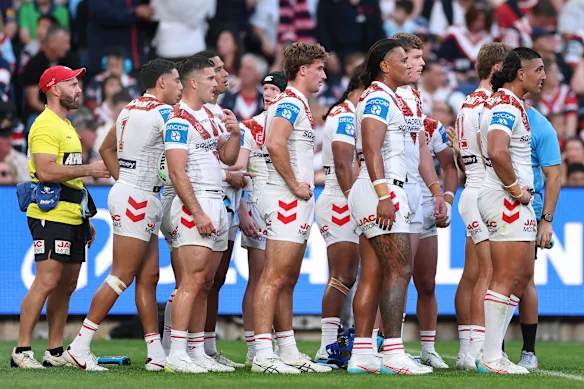
The hardest part about watching the St George Illawarra Dragons right now isn’t the losing. Fans can cop losing if they can see a direction. What’s becoming harder to stomach is the feeling that this season is drifting without a clear purpose, caught between trying to be competitive and the reality that they need to start planning for the long-term health of the club.
Another loss on the weekend, this time against the Newcastle Knights, only reinforced the mood surrounding the club. Interim coach Dean Young insisted post-match the side is improving, but frustration is clearly building both externally and internally as sections of the fanbase responded with boos as another game slipped away.
That tension says everything about where the Dragons sit right now. They’re being blown off the park every week, but they also don’t look like a side building toward anything meaningful this season. Their draw and results tell the story of a club stuck in survival mode, struggling to generate momentum while the rest of the competition accelerates around them.
The worrying part is that the roster instability isn’t easing either. Veteran hooker and captain Damien Cook is heading to the English Super League next season, continuing the sense of transition around the club. Losing experienced players is manageable when a young core is emerging behind them. The problem for the Dragons is that right now it’s difficult to identify exactly which players the club is truly building around long term.
That’s why the back half of this season needs a mindset shift. Finals football is effectively out of reach, so the priority can’t simply be grinding out respectable losses with ageing combinations that won’t define the future of the club anyway. The Dragons need to use the remainder of 2026 to answer bigger questions about their next generation.
Who handles consistent NRL responsibility when pressure rises? Which young forwards can become genuine starters players? Which outside backs are worth persisting with despite mistakes? Those answers only come through opportunity, not caution which is designed to avoid criticism for another week.
Young’s frustration after the Knights loss was understandable because effort alone clearly isn’t the issue. There are patches where the Dragons compete physically and stay in contests. But modern NRL sides punish poor edges, slow reactions and inconsistent execution ruthlessly.
More importantly, fans need something to emotionally invest in again. At the moment, it’s hard to identify the weekly reason for optimism. The club’s strongest periods historically were built around development pathways, local identity and young players growing together over time. That formula feels distant right now.
There’s also no value pretending short-term fixes will suddenly rescue the season. The competition is too strong, and the ladder already reflects that reality. What the Dragons can still salvage, however, is clarity. A difficult season becomes more acceptable if supporters can genuinely see the foundations of a better future being laid underneath it.
That means backing youth through mistakes, simplifying expectations and resisting the temptation to chase superficial improvements. Fans will forgive losses faster than they’ll forgive stagnation.
The Dragons don’t need miracles in 2026 anymore. They need honesty about where they are, patience with where they’re trying to go and a genuine commitment to building a roster capable of competing beyond this season. Right now, that future feels uncertain. The next few months should be about changing that.
Leave a Reply